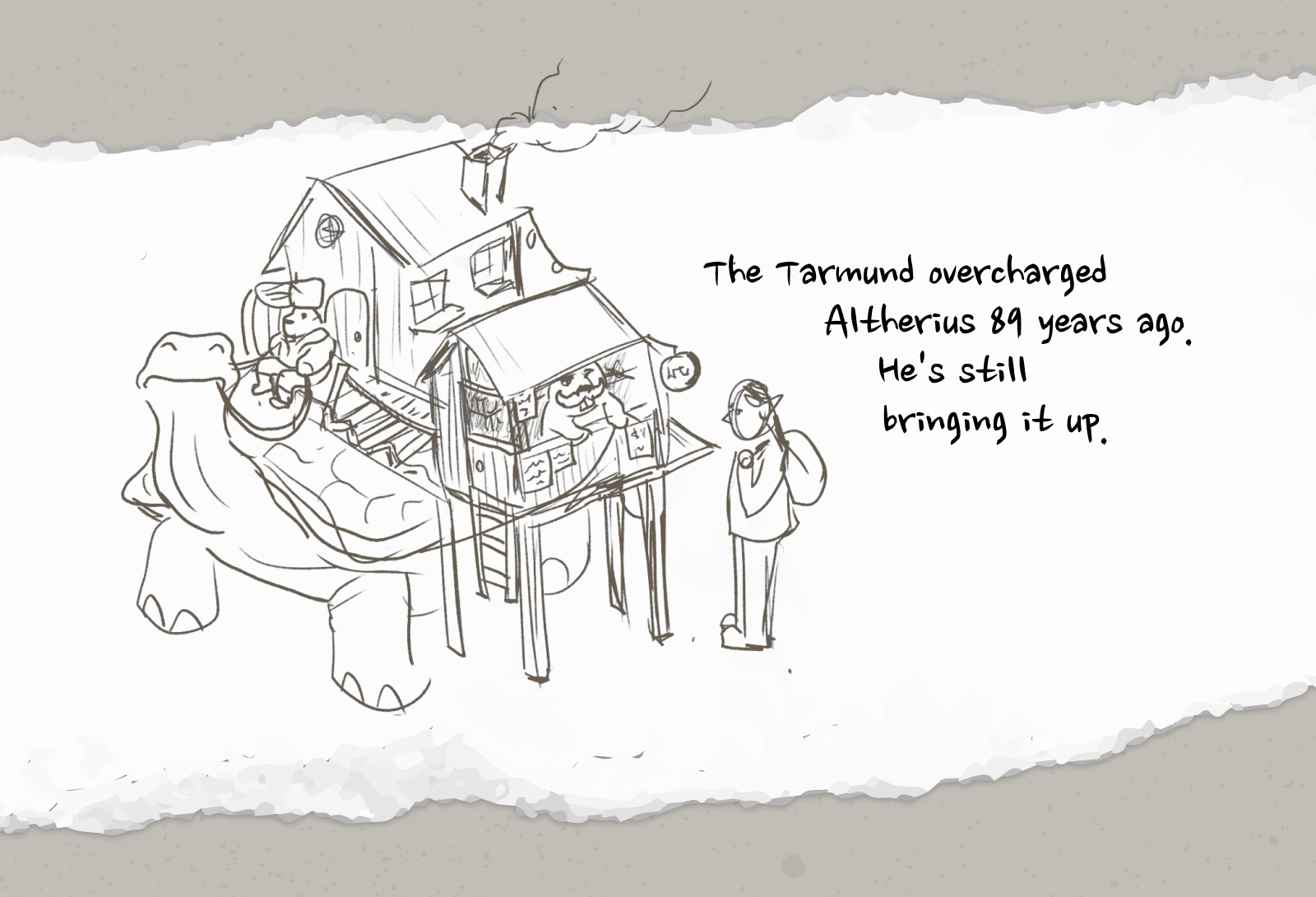
The first elves opened their eyes on a battlefield.
They were not born so much as deployed. Made in the midst of the Kosmari War, the oldest war the world remembers, woven from light and darkness both, the first of their kind learned how to walk and wield magic in the same season.
They were made as tools, shaped by their creators to serve one purpose: to fight.
Their first great victory came at Mount Vaelor, where the young race helped halt an advance that had broken everything before it, proving they were far more than disposable soldiers. When the enemy was defeated and the fighting was over, the elves faced a problem no one had prepared them for: peace.
The war ended. The elves remained.
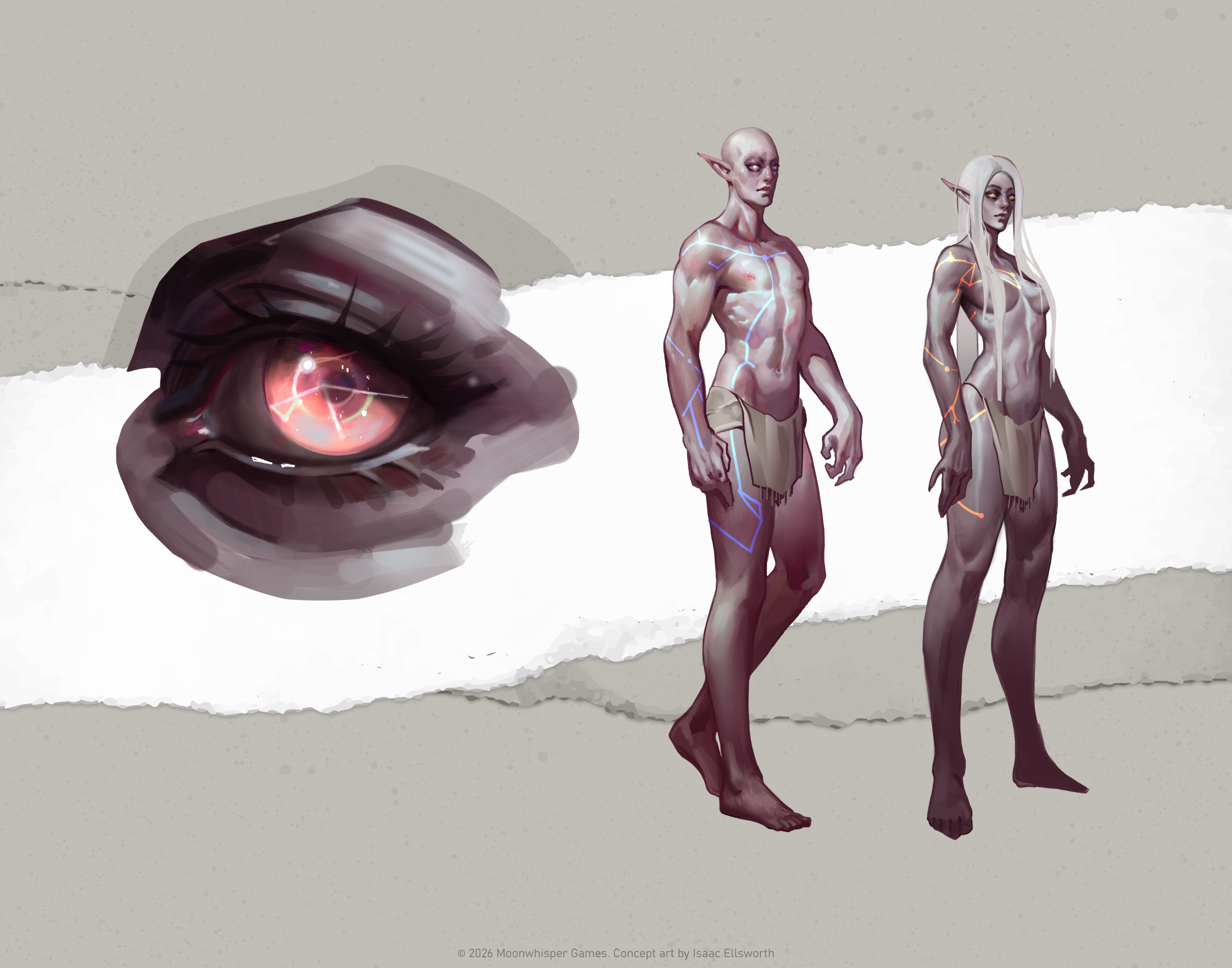
ELVES OF IRETHEIA (PLAYABLE RACE)
War had given the elves a purpose. Peace demanded they find their own. The elves chose all of them.
They built cities and filled them with magic, scholarship, art, craftsmanship, and trade. A life that spans centuries leaves room for devotion the younger races can barely imagine: decades given to a single spell, generations spent perfecting one craft, entire lifetimes invested in research. For an elf, no desire ranked above legacy. Comfort, wealth, even love could wait. What mattered was to leave behind something the centuries could not erase.
Elven identity is not inherited but earned: from magic to politics, every path is its own road to renown. There is always another achievement to claim, another rival to surpass, another boundary to cross. An elf grows up among monuments older than kingdoms, and dreams of building something that will outshine them.
Leadership follows the same rule. Bloodline rarely decides who rules. Wisdom, magical ability, victories, and works of art that outlive their makers do. Every city crowns what it values most.
Long lives shape everything else. Traditions endure. Reputations endure. So, unfortunately, do grievances. An elf may spend a century composing a song and another century remembering an insult, and consider both time well spent.
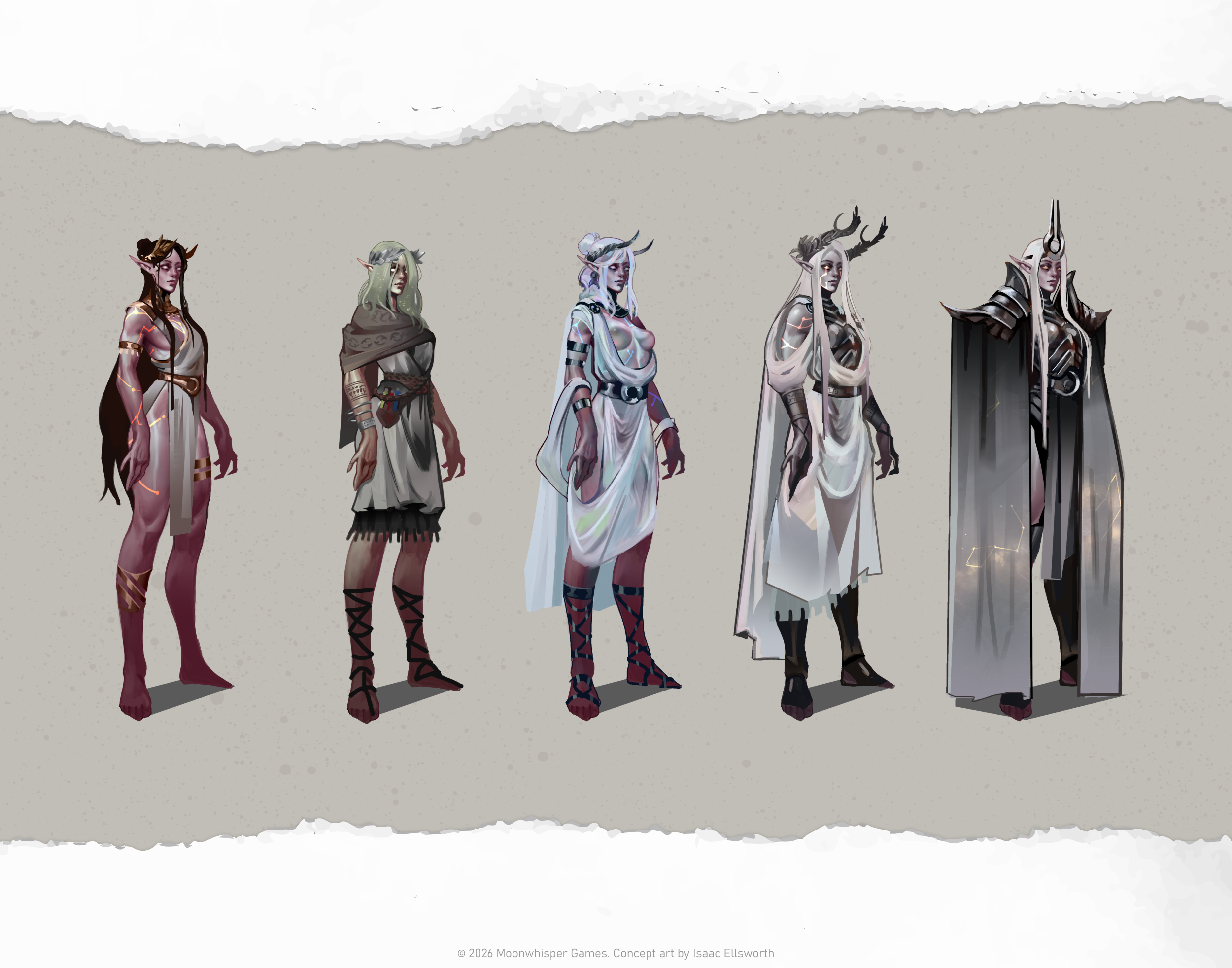
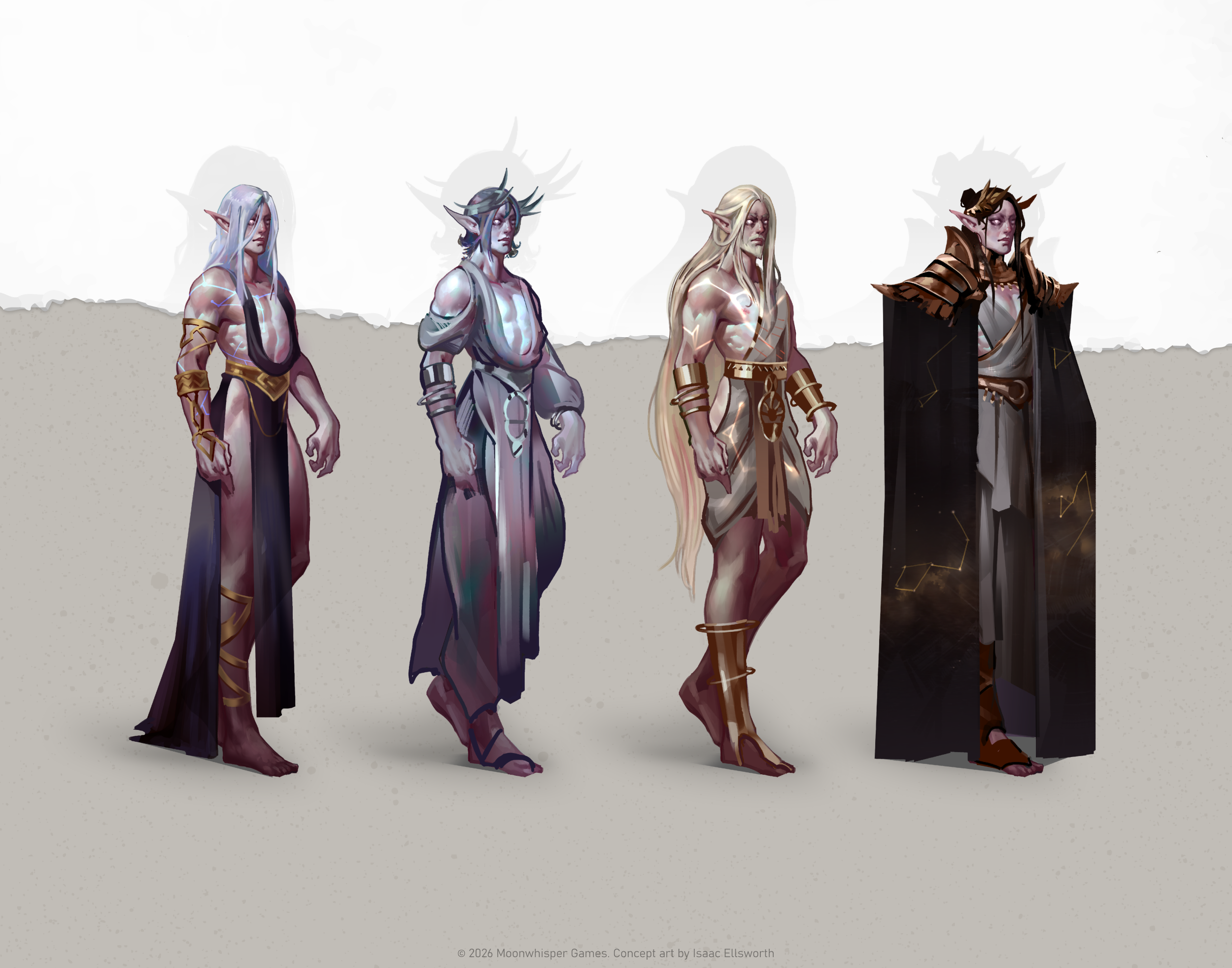
THE CITIES OF IRETHEIA
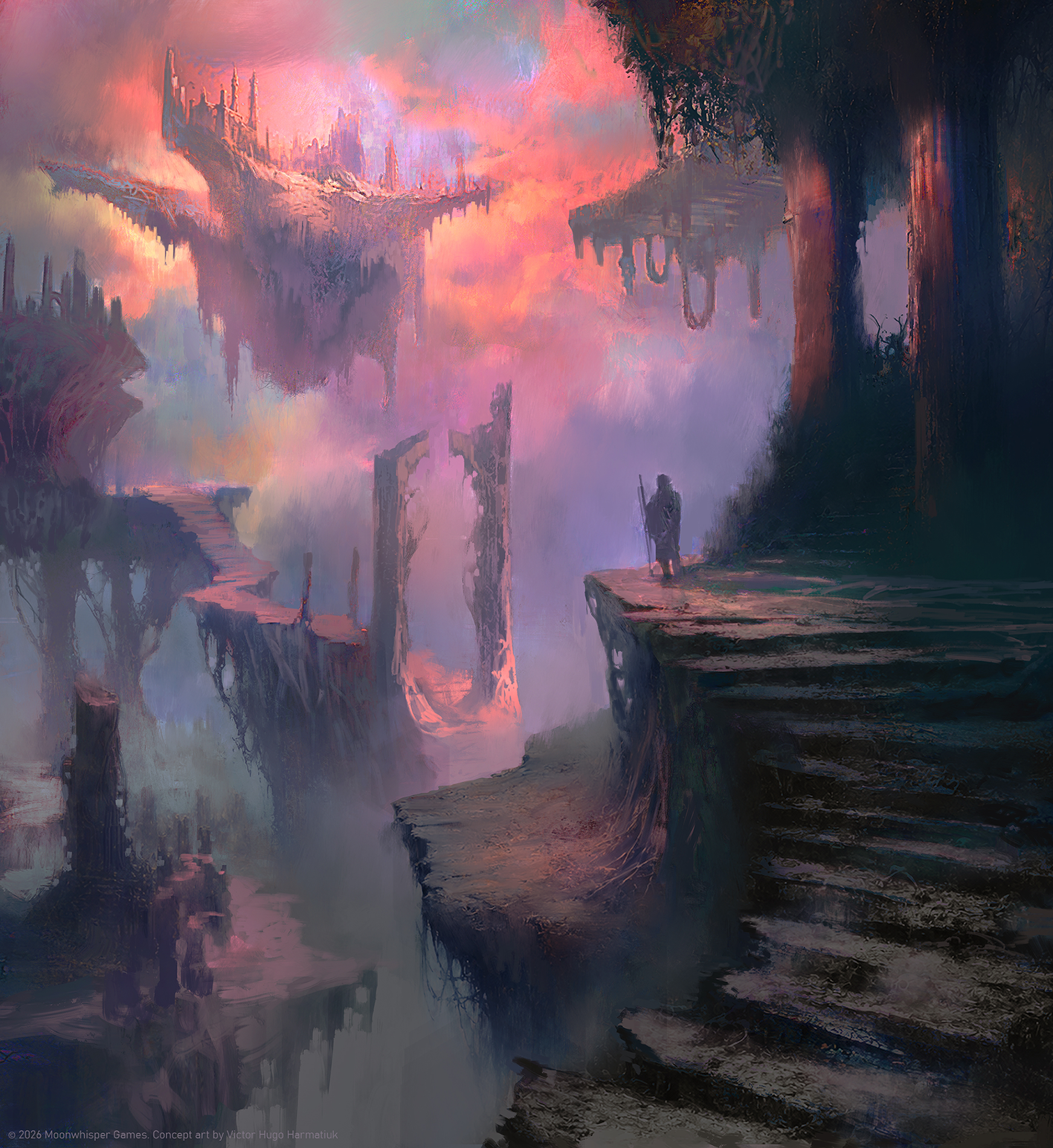
Every city of Iretheia was an argument about what greatness meant.
Akhaed made the argument for power. Raised around Mount Vaelor, the site of the elves' first great victory, it became the seat of the Archon, whose authority was the closest thing elvenkind ever had to a single voice.
Elyrion argued for knowledge. Built around one of the oldest schools of magic in the world, its scholars studied the stars and the workings of magic itself, and their teachings traveled far beyond elven shores.
Caelanor, the City of Makers, argued for craft. Its artisans and guilds held that knowledge was not meant to rest in libraries but to be forged into things that last.
Letharis argued for beauty and became the home of elven music and fine art.
And Nythara, the Living City, made an argument the others preferred to ignore. Grown into the forest rather than built beside it, shaped by magic that ran deeper with every generation, it pursued experiments the rest of Iretheia found wiser not to question.
Together they formed a civilization that was brilliant, diverse, and increasingly competitive.
THE JEWEL BEYOND THE SEA
Atrea was the city that looked outward.
While the old cities argued among themselves, Atrea built ships. The first great colony beyond the home islands, it grew rich the way ports grow rich, on everything that passes through. Its merchants traded with the Mastaari of the southern deserts, with the Dwarves beneath their mountains, with peoples the homeland knew only from stories.
Wealth became influence, and influence became a challenge. For centuries, ambition and achievement had driven this civilisation. Now it would discover how quickly success could turn into rivalry.
THE ATREAN WAR
Nobody agrees on how it started.
Some historians describe a struggle over trade and mastery of the seas. Others whisper of forbidden magic at the heart of Atrea's wealth. Whatever the truth, the old powers found their reasons, and one by one, they united against the city that had outgrown them.
Even the ancient guardians of elvenkind, revered beings called Incarnates who had watched over them since their first days, could not agree. Most stood with the coalition. One of them, Faella, the Incarnate of Compassion, chose to defend Atrea. Her decision remains one of the great mysteries of history, for she knew the city would fall, and refused to abandon its people anyway.
Atrea resisted for years. Its walls, its fleets, and its magic made it very nearly unconquerable, and in the end it was not conquered. It was betrayed. The gates opened from within.
THE DEATH OF AN IMMORTAL
Faella's decision to defend Atrea led to the death of her own kin, Archael, the Incarnate of Heroism.
In the final siege, Archael fell, a being no one believed could die. No two accounts agree on how. A cursed arrow, say some. Treachery among the coalition's own leaders, say others. The darkest stories name Faella herself, though nothing was ever proven.
The death of an Incarnate was unprecedented. The guardians buried one of their own, left with no answers as to how it was even possible.
They withdrew. The beings who had watched over elvenkind since its first breath vowed never again to decide its fate, leaving the wars of the cities to the cities. Some elves called it abandonment. The guardians never responded.
The elves were left to themselves. It was, some noted, what they had always claimed to want.
THE CLOSED SHORE
After Atrea, the elves discovered a new purpose to perfect: solitude.
It happened gradually. Trade continued through the western colonies, and explorers still crossed distant seas, but the homeland itself drew inward, one closed harbor at a time. Eventually, foreigners were forbidden from setting foot on Iretheian soil altogether.
To the peoples beyond its shores, the homeland became almost mythical: a distant land of ancient cities, deep magic, and people untouched by the passage of time.
THE LONG PEACE
In its solitude, their civilization endured. Decades turned into centuries, centuries became an age, and Iretheia stood unchanged. The elves believed it always would. They had built it to last. Permanence was, in a sense, their final masterpiece.
They were wrong.
UNTIL THE NEXT JOURNEY
What do you think of the elves of Iretheia and their long road? Join us on Discord and share your thoughts.
Until then, safe travels!
BONUS TARMUND CONTENT